
Francis Lieber
Author of the first modern codification of the laws of war.

via Wikipedia: Francis Lieber · see source
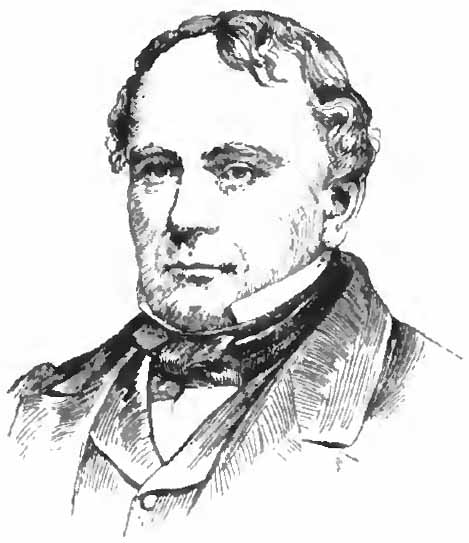
Francis Lieber (born Franz Lieber; 18 March 1798 – 2 October 1872) was a German and American jurist and political philosopher. He is best known for the Lieber Code, the first modern codification of the customary law and the laws of war for battlefield conduct, which served as a basis for the Hague Conventions of 1899 and 1907 and for the later Geneva Conventions. He was also a pioneer in the fields of law, political science, and sociology in the United States.
- born
- 18 March 1798 (or possibly 1800; he lied about his age to enlist)
- died
- 2 October 1872
- field
- Jurist, political philosopher, political scientist
- nationality
- German and American
- known_for
- Lieber Code (General Orders No. 100, 1863)
Verified Timeline
Lore & Background
Franz Lieber was born the tenth of twelve children to a wealthy Jewish merchant family in Berlin, then the capital of the Kingdom of Prussia. The year of his birth (1798 or 1800) has been debated because he lied about his age in order to enlist. He joined the Colberg Regiment of the Prussian Army in 1815 during the Napoleonic Wars, and was wounded in Namur, Belgium during the Battle of Waterloo. He obtained a doctorate from the University of Jena in 1820. A republican, he volunteered to fight on the Greek side in the Greek War of Independence in 1821, but became disillusioned due to the religious violence and war crimes committed by the Greek rebels. After experiencing repression in Prussia for his political views, he emigrated to the United States in 1827. In America, Lieber worked as a swimming and gymnastics instructor, editor of the first editions of the Encyclopaedia Americana, journalist, and translator. He wrote a plan of education for the newly founded Girard College and lectured at New York University before becoming a tenured professor of history and political economy at the University of South Carolina in 1835. During his 20 years at the college, he owned slaves until his departure in 1856. In 1857, he joined the faculty at Columbia University where he assumed the chair of history and political science in 1858. He transferred to Columbia Law School in 1865 where he taught until his death in 1872. During the American Civil War, Lieber sided with the North despite having been a prominent resident of South Carolina and a slave owner. One of his sons, geologist Oscar Montgomery Lieber, joined the Confederate army and died at the Battle of Eltham's Landing. A second son, Hamilton, who had fought for the Union, lost an arm. Lieber was commissioned by the U.S. Army to write the Instructions for the Government of the Armies of the United States in the Field (General Orders No. 100, 24 April 1863), the Lieber Code of military law that governed the battlefield conduct of the Union Army during the American Civil War.
Reader's Guide
Francis Lieber's most enduring contribution is the Lieber Code, the first modern codification of the customary law and laws of war for battlefield conduct. Issued as General Orders No. 100 on 24 April 1863, it governed the conduct of the Union Army during the American Civil War and later served as a basis for the Hague Conventions of 1899 and 1907 and for the Geneva Conventions. Lieber was also a pioneer in the United States in the fields of law, political science, and sociology. His career spanned continents and disciplines: he fought in European wars, edited the first editions of the Encyclopaedia Americana, taught at major universities, and advised the U.S. government. His life reflects the complexities of his era—he opposed secession and slavery in principle yet owned slaves himself, and his family was divided by the Civil War. The Lieber Code remains a landmark in the legal regulation of armed conflict.
Did You Know?
- Lieber lied about his age to enlist in the Prussian Army, so his birth year is debated as either 1798 or 1800.
- He was wounded at the Battle of Waterloo in Namur, Belgium, while serving in the Colberg Regiment.
- He obtained a doctorate from the University of Jena in 1820 after finishing his dissertation in mathematics within four months.
- One of his sons, Oscar Montgomery Lieber, fought for the Confederacy and died at the Battle of Eltham's Landing; another son, Hamilton, fought for the Union and lost an arm.
- Lieber owned slaves while a professor at the University of South Carolina until his departure in 1856.
Prussian Youth and Political Persecution
Francis Lieber entered the world in 1798 as the tenth of twelve children in a prosperous Jewish merchant household in Berlin, the capital of the Kingdom of Prussia. His youth was shaped by the upheaval of the Napoleonic era; in 1815 he enlisted in the Colberg Regiment and saw combat at the Battle of Waterloo in Namur, Belgium, where he was wounded. After recovering from his injuries and a bout of typhoid fever, he returned to civilian life as a high school student at Graues Kloster. It was there that his republican convictions drew the attention of Prussian authorities, who arrested him and held him in pretrial detention at Spandau prison from July through November 1819. His political commitments continued to haunt him: when he attempted to enter the University of Berlin, his membership in the Berliner Burschenschaft, an organization opposed to the Prussian monarchy, led to his denial of admission. He eventually completed a doctorate at the University of Jena in 1820, finishing a mathematics dissertation within four months, but Prussian officials repeatedly pursued him for his views, forcing him to flee from Jena to Dresden and later to England.
The Lieber Code and the Architecture of Modern War Law
In April 1863, the U.S. Army commissioned Lieber to draft what would become General Orders No. 100, formally titled the Instructions for the Government of the Armies of the United States in the Field. This document, now universally known as the Lieber Code, represented a watershed moment in the history of armed conflict: it was the first systematic codification of customary law and the laws of war as they applied to the conduct of an army operating in the field. The Code governed the battlefield behavior of the Union Army throughout the remainder of the American Civil War, which raged from 1861 to 1865. Its influence extended far beyond that single conflict. The principles Lieber articulated became a foundational reference for the Hague Conventions of 1899 and 1907, and they also informed the later Geneva Conventions. In this way, a German-born jurist who had spent decades teaching in American universities left an indelible mark on the international legal framework that still structures how nations regulate the conduct of war today.
A Restless American Career in Education and Letters
After emigrating to the United States in 1827, Lieber endured a period of professional uncertainty that would have been unrecognizable to the later academic giant. In Boston he ran a swimming and gymnastics program that attracted the attention of President John Quincy Adams, though the novelty faded and the school closed within two years. He then conceived and edited the Encyclopaedia Americana, a thirteen-volume English translation of the Brockhaus encyclopedia published in Philadelphia between 1829 and 1833, while also working as a journalist, translator, and confidant to Alexis de Tocqueville. His academic trajectory accelerated when he drafted a plan of education for the newly founded Girard College and delivered lectures at New York University. In 1835 he secured a tenured chair in history and political economy at the University of South Carolina. A decade later, in 1857, he joined Columbia University, assuming the chair of history and political science in 1858. In 1865 he transferred to Columbia Law School, where he taught until his death in October 1872. Throughout, he is credited as a pioneer in American law, political science, and sociology.
Greece, Rome, and the Road to Exile
In 1821, driven by republican idealism, Lieber volunteered to fight alongside Greek rebels in their war of independence. The experience, however, soured quickly; he became deeply disillusioned by the religious violence and war crimes committed by the Greek fighters themselves. He withdrew from the conflict and spent the following year in Rome, tutoring the son of the Prussian ambassador and historian Barthold Georg Niebuhr. There he composed an account of his Greek experiences, published in Leipzig in 1823 and also in Amsterdam under the title The German Anacharsis. His return to Germany on a royal pardon proved short-lived: Prussian authorities imprisoned him again at Köpenick, where he spent pretrial detention from August 1824 to April 1825. During that confinement he wrote a collection of poems, Wein- und Wonne-Lieder, published under the pen name Franz Arnold with Niebuhr's assistance. In 1825 he fled to England, where he supported himself through private lessons and contributions to German periodicals. In London he encountered the American writer John Neal, who championed Lieber's gymnastic expertise, and he met the woman who would become his wife, Mathilda Oppenheimer.
Gallery

Frequently Asked Questions
Who is Francis Lieber?
Francis Lieber (18 March 1798 – 2 October 1872) was a German-born American jurist and political philosopher. He is best remembered for authoring the first modern written codification of the laws of war and for helping establish law, political science, and sociology as academic fields in the United States.
What is the Lieber Code?
The Lieber Code, issued as General Orders No. 100 in 1863 during the American Civil War, was the first modern codification of customary battlefield conduct rules. It set out practical guidelines for how soldiers and commanders should behave in armed conflict.
How did Francis Lieber's work shape international law?
The principles he codified in 1863 became a direct foundation for the Hague Conventions of 1899 and 1907, as well as the later Geneva Conventions. In that sense, his 19th-century framework still underpins the modern rules governing armed conflict worldwide.
Why is Francis Lieber considered important in American legal history?
Beyond the Lieber Code, he is credited as a pioneer who helped formalize law, political science, and sociology as distinct academic disciplines in the United States. His work bridged European legal tradition and American jurisprudence, giving the young republic a more systematic intellectual foundation for its legal institutions.
What was Francis Lieber's background before he became an American jurist?
Born Franz Lieber in Germany, he was already a political philosopher and jurist before emigrating to the United States. A noted detail from his early life is that he reportedly lied about his age to enlist in military service, reflecting his deep commitment to political causes from a young age.
More in Jurists And Legal Scholars 1-24
Elsewhere in the Jurists And Legal Scholars universe
Spotted an error? Know more?
This is a living reference — every entry is fact-audited, and reader corrections feed straight into our audit queue. Suggest an edit · See this site's audit record