Edward Coke
English jurist who limited royal power and shaped constitutional law.

via Wikipedia: Edward Coke · see source
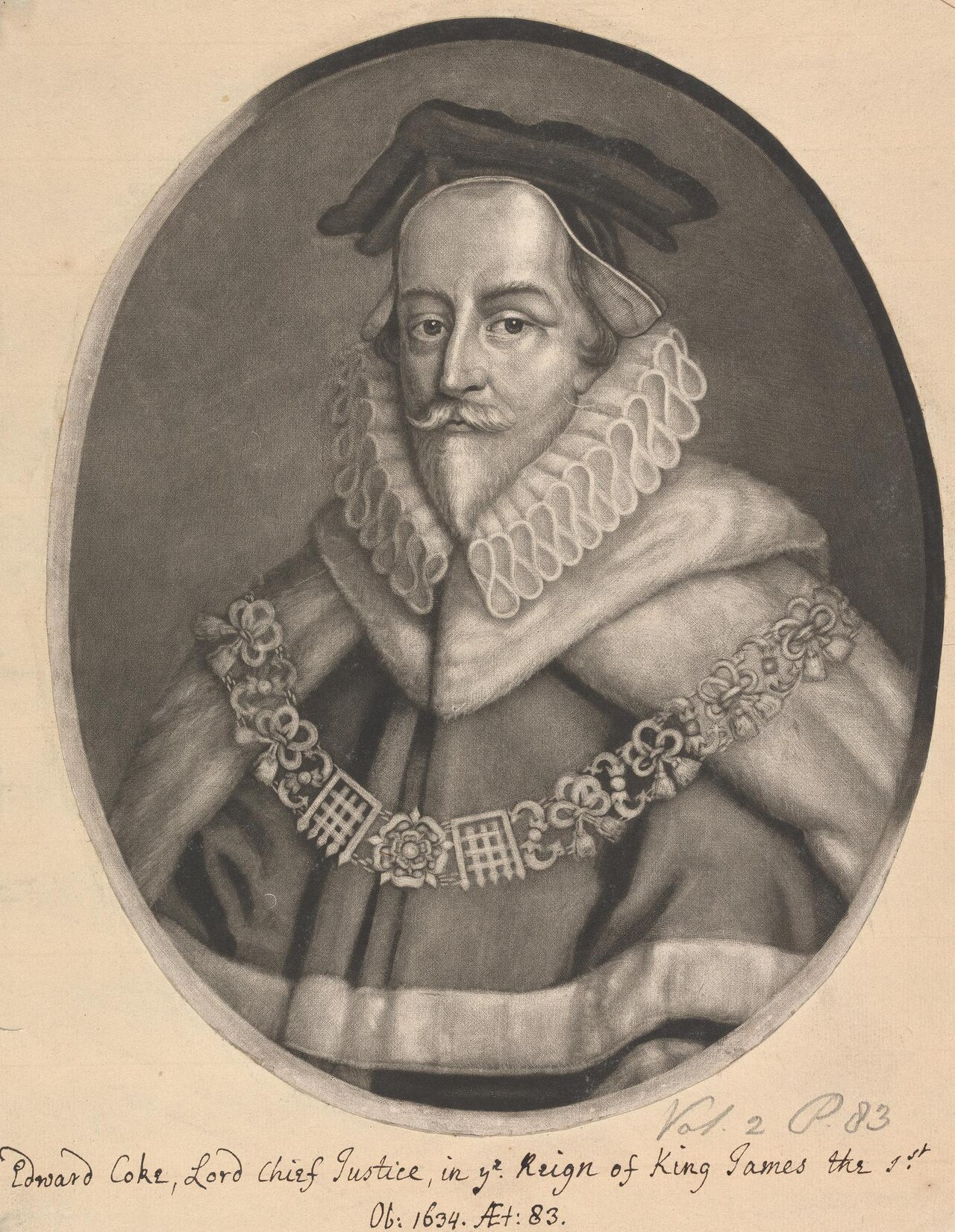
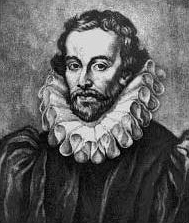
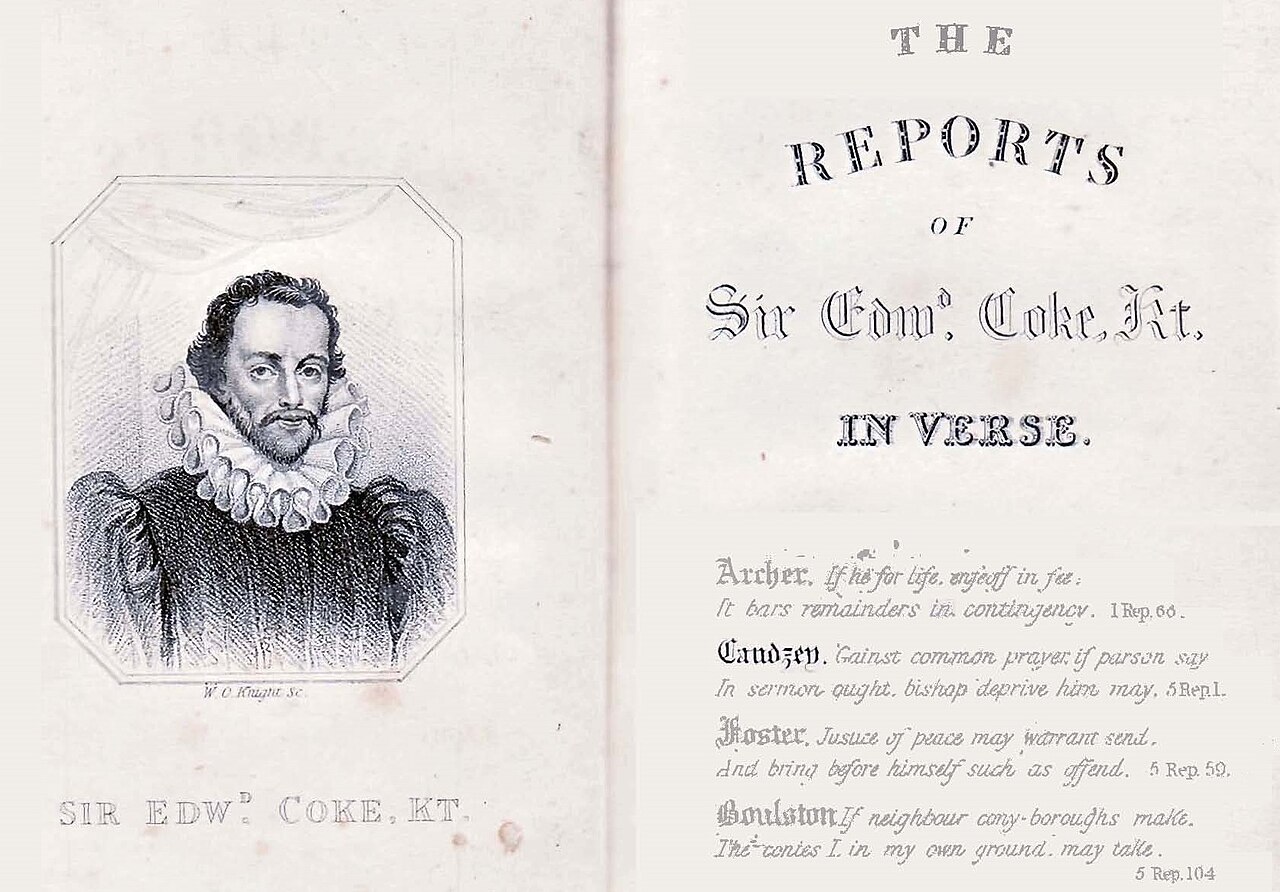
Sir Edward Coke (1 February 1552 – 3 September 1634) was an English barrister, judge, and politician, often considered the greatest jurist of the Elizabethan and Jacobean eras. He is best known for his legal writings, the Institutes and Reports, and for his role in limiting royal power through decisions such as the Case of Proclamations and Dr. Bonham's Case.
- born
- 1 February 1552
- died
- 3 September 1634
- field
- Law, politics
- nationality
- English
- known_for
- Institutes, Reports, Statute of Monopolies, Petition of Right
Lore & Background
Edward Coke was born on 1 February 1552 in his father's manor of Mileham in Norfolk, one of eight children. He studied at the Norwich Free Grammar School from age eight, then matriculated to Trinity College, Cambridge in 1567, leaving after three years without a degree. He became a member of Clifford's Inn in 1571, then transferred to the Inner Temple on 24 April 1572, where he was called to the Bar on 20 April 1578. As a barrister, his first case was Lord Cromwell's Case in 1581 in the Court of King's Bench. He took part in several notable cases, including Slade's Case, before being elected to Parliament, serving as Solicitor General and then Speaker of the House of Commons. As Attorney General, he led prosecutions against Robert Devereux, Sir Walter Raleigh, and the Gunpowder Plot conspirators. He was knighted and made Chief Justice of the Common Pleas. As Chief Justice, he restricted the use of the ex officio (Star Chamber) oath and, in the Case of Proclamations and Dr. Bonham's Case, declared the King subject to the law and Parliament's laws void if against 'common right and reason'. Transferred to the King's Bench, he restricted the definition of treason and declared a royal letter illegal, leading to his dismissal on 14 November 1616. He returned to Parliament, where he campaigned for the Statute of Monopolies and authored the Petition of Right, a document considered one of the three crucial constitutional documents of England, along with Magna Carta and the Bill of Rights 1689.
Reader's Guide
Coke's significance lies in his assertion that the monarch is subject to the law, a principle articulated in the Case of Proclamations and Dr. Bonham's Case. His decision in Dr. Bonham's Case was later used in America to justify voiding the Stamp Act 1765 and writs of assistance, contributing to the American War of Independence. His writings, the Institutes and Reports, profoundly influenced English and American law, with the Institutes described by John Rutledge as 'almost the foundations of our law' and the Reports called 'perhaps the single most influential series of named reports'. The Statute of Monopolies, which he wrote and campaigned for, is considered one of the first actions in the conflict between Parliament and monarch leading to the English Civil War. In the United States, his decisions and writings profoundly influenced the Third and Fourth amendments to the United States Constitution while necessitating the Sixteenth.
Did You Know?
- Coke's second wife, Elizabeth Hatton, regularly spelt his name 'Cook' when writing to him, showing that 'cook' and 'coke' were homonyms at the time.
- Coke was called to the Bar on 20 April 1578 after only six years at the Inner Temple, a remarkably fast rate given the normal requirement of eight years of study.
- In his first case, Lord Cromwell's Case in 1581, Coke found a flaw in the pleadings that invalidated the claimant's case due to an inaccurate English copy of the Latin statute of scandalum magnatum.
- Coke was dismissed from the bench on 14 November 1616 after declaring a royal letter illegal and restricting the definition of treason.
- The Petition of Right, which Coke authored and helped pass, is considered one of the three crucial constitutional documents of England, along with Magna Carta and the Bill of Rights 1689.
From Barrister to Chief Justice: A Career in Ascent and Confrontation
Coke's trajectory from newly called barrister to the highest judicial office was rapid and consequential. Called to the Bar at the Inner Temple in April 1578, he quickly built a reputation through notable cases such as Slade's Case. Political favour then carried him through the Solicitor Generalship, the Speakership of the House of Commons, and the Attorney Generalship, where he led prosecutions against Robert Devereux, Sir Walter Raleigh, and the Gunpowder Plot conspirators. Knighted in recognition of those services, he was elevated to Chief Justice of the Common Pleas. In that seat he curtailed the ex officio oath of the Star Chamber and, through the Case of Proclamations and Dr. Bonham's Case, asserted that the King was subject to the law and that parliamentary statutes could be void if they violated common right and reason. The Crown responded by shuffling him to the King's Bench, where he continued to narrow the definition of treason and rule a royal letter illegal. His dismissal on 14 November 1616 ended his judicial career permanently.
Declaring the King Subject to the Law
Coke's most far-reaching judicial acts were his repeated assertions that sovereign power was not above legal constraint. In the Case of Proclamations and Dr. Bonham's Case he declared the King bound by the law and held that an act of Parliament could be rendered void if it contravened common right and reason. He simultaneously restricted the use of the ex officio oath, an instrument of the Star Chamber, thereby limiting a key tool of royal interrogation. These positions made him a persistent irritant to the Crown. His transfer from the Common Pleas to the King's Bench was widely understood as a move to a seat where he could do less damage, yet he pressed on, narrowing the legal scope of treason and declaring a royal letter illegal. His eventual dismissal on 14 November 1616 closed his bench career but did not silence him; it merely redirected his constitutional principles into the parliamentary arena, where they would take legislative form against royal prerogative.
Parliamentary Opposition and the Architecture of English Constitutionalism
With no realistic prospect of regaining a judicial post, Coke returned to Parliament and swiftly became a leading voice in the opposition. His legislative output was transformative. He wrote and campaigned for the Statute of Monopolies, which substantially restricted the monarch's power to grant patents. He also authored and was instrumental in securing the passage of the Petition of Right, a document regarded as one of England's three crucial constitutional texts alongside Magna Carta and the Bill of Rights 1689. The Statute of Monopolies is considered among the first significant actions in the long conflict between Parliament and the Crown that ultimately erupted into the English Civil War. His earlier tenure as Speaker of the Commons and Solicitor General had given him deep institutional knowledge, which he now wielded with renewed force against royal prerogative, reinforcing his standing as the greatest jurist of the Elizabethan and Jacobean eras.
A Legacy That Crossed the Atlantic
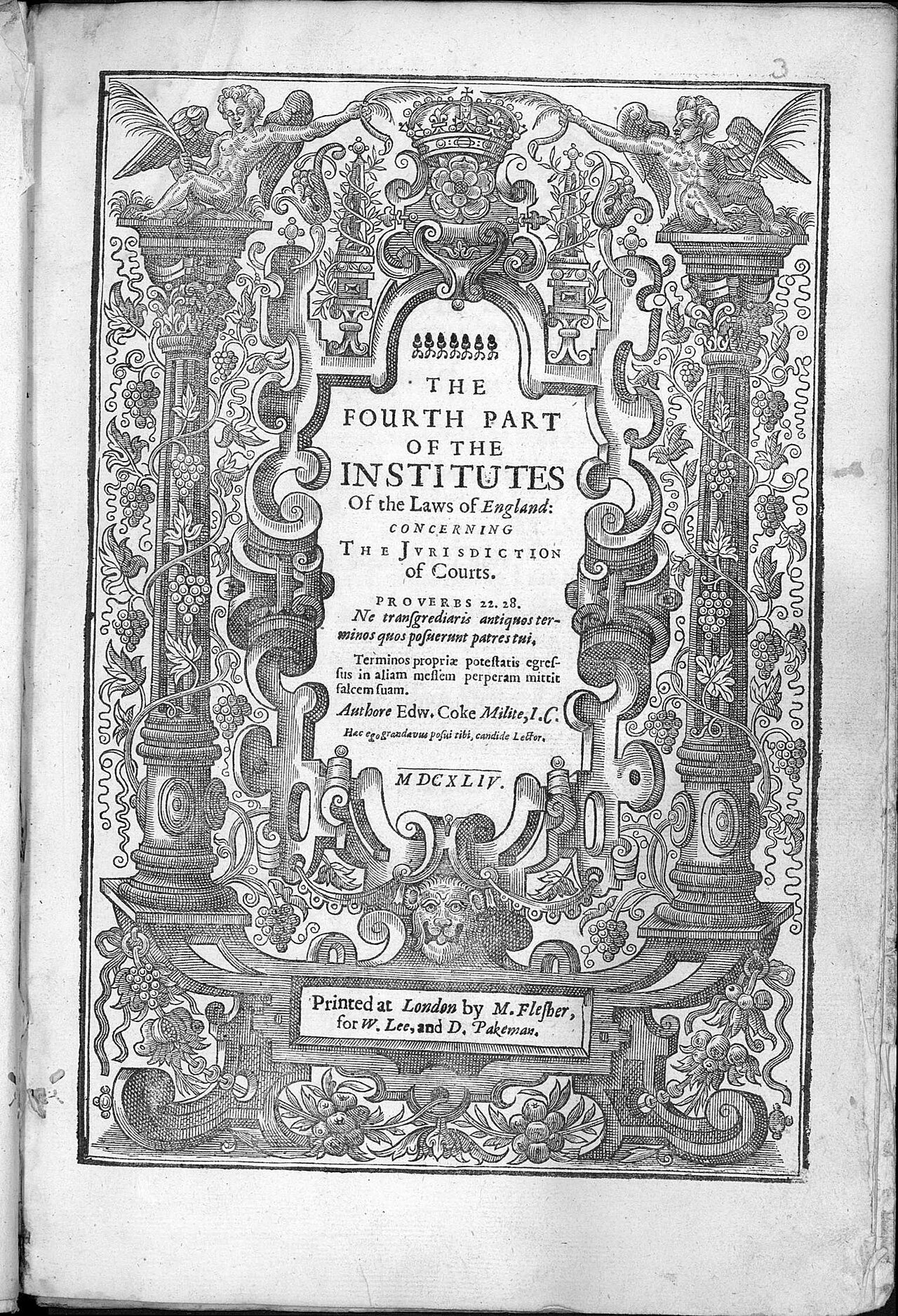
Coke's written corpus—his Institutes and his Reports—remains foundational to the common law tradition. John Rutledge described the Institutes as almost the foundations of our law, and his Reports have been called perhaps the single most influential series of named reports in legal history. Within England and Wales, his statements and works were used to justify the right to silence. Across the Atlantic, his reasoning in Dr. Bonham's Case was cited to challenge the Stamp Act of 1765 and writs of assistance, contributing to the American War of Independence. After the United States was established, his decisions and writings profoundly shaped the Third and Fourth Amendments to the Constitution while also necessitating the Sixteenth Amendment. His influence thus spans centuries and continents, embedding his legal philosophy into the very architecture of Anglo-American jurisprudence.
Gallery
Frequently Asked Questions
Who is Edward Coke?
Sir Edward Coke was an English barrister, judge, and politician who lived from 1552 to 1634. He is widely regarded as the preeminent legal mind of the Elizabethan and Jacobean periods.
What are Edward Coke's most famous legal writings?
His two major works are the Institutes and the Reports, both foundational texts in English common law. He also played a key role in shaping the Statute of Monopolies and the Petition of Right.
How did Edward Coke limit royal power?
Through landmark decisions like the Case of Proclamations and Dr. Bonham's Case, he established that the crown could not act arbitrarily beyond the law. These rulings became cornerstones of constitutional restraint on monarchy.
Why is Edward Coke important to constitutional law?
His insistence that even the king was subject to the law helped lay the groundwork for later constitutional frameworks. He is often credited with shaping the principle that parliamentary statutes and common law could check executive authority.
What was Edward Coke's nationality and field of work?
He was English by nationality and worked across law and politics throughout his career. His contributions spanned judicial decisions, legislative advocacy, and scholarly legal writing.
More in Jurists And Legal Scholars 1-24
Elsewhere in the Jurists And Legal Scholars universe
Spotted an error? Know more?
This is a living reference — every entry is fact-audited, and reader corrections feed straight into our audit queue. Suggest an edit · See this site's audit record