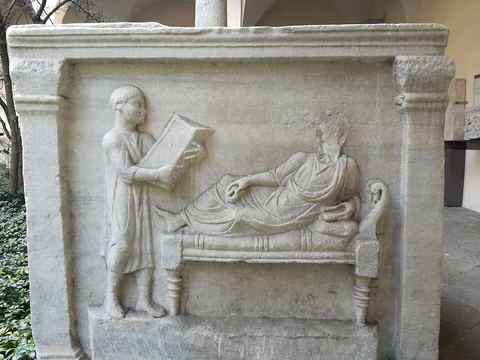
William Stoughton (judge)
Salem witch trial chief justice who never recanted spectral evidence.
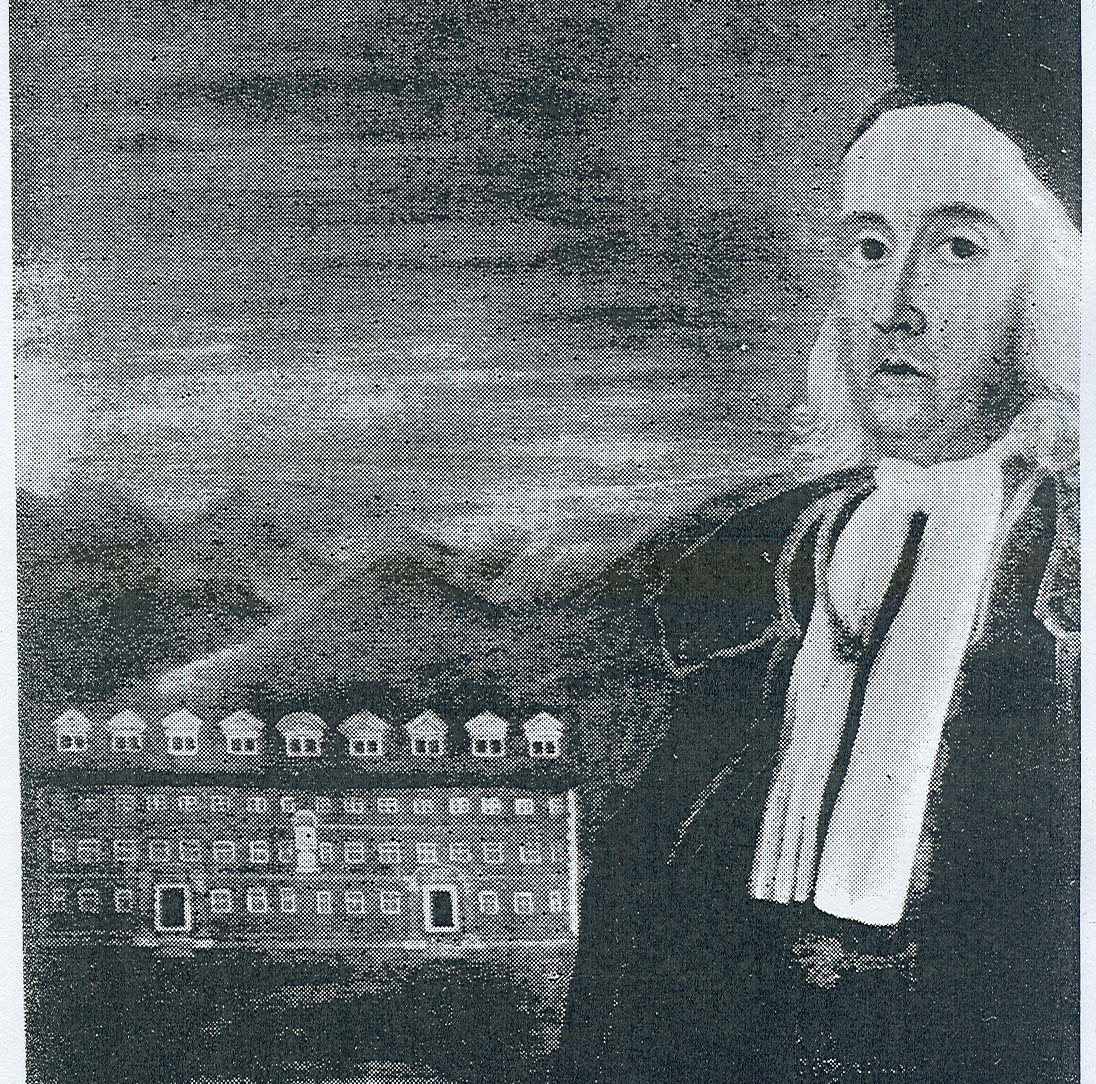
William Stoughton (1631 – July 7, 1701) was a magistrate and colonial administrator in the Province of Massachusetts Bay. He oversaw the Salem Witch Trials, serving as chief justice of the Special Court of Oyer and Terminer in 1692 and later as chief justice of the Superior Court of Judicature in 1693. During these trials, he drew controversy for allowing spectral evidence—testimony based on alleged demonic visions. Unlike several other magistrates, he never acknowledged that this decision might have been a mistake.
Stoughton graduated from Harvard College in 1650 and pursued religious studies in England, where he also worked as a preacher. He returned to Massachusetts in 1662 but chose politics over the ministry. A skilled politician, he held positions in nearly every government during a turbulent period that included the revocation of the colony’s first charter in 1684, the introduction of its second charter in 1692, and the unpopular administration of Sir Edmund Andros in the late 1680s. He served as lieutenant governor from 1692 until his death in 1701, acting as governor for roughly six years when no appointed governor was present. A major landowner, he partnered with Joseph Dudley and other powerful figures in land purchases, and the town of Stoughton, Massachusetts, was named after him.
Born in 1631 to Israel and Elizabeth Knight Stoughton, his exact birthplace is unknown due to a lack of birth or baptismal records, and the precise date of his parents’ migration from England to the Massachusetts Bay Colony is unclear. By 1632, however, the family had settled in Dorchester, Massachusetts. Stoughton graduated from Harvard in 1650 with a theology degree and intended to become a Puritan minister. He traveled to England, studied at New College, Oxford, and earned an M.A. in theology in 1653. A pious preacher, he believed in the “Lord’s promise and expectations of great things.” England was then under Puritan Commonwealth rule, though 1653 was the year Oliver Cromwell dissolved Parliament, beginning The Protectorate. Stoughton preached in Sussex until Charles II was restored to the throne in 1660, after which he lost his position during a crackdown on religious dissenters.
With few prospects in England, Stoughton returned to Massachusetts in 1662. He preached occasionally in Dorchester and Cambridge but declined permanent ministerial posts, instead entering politics and land development. He served on the colony’s council of assistants almost every year from 1671 to 1686 and represented the colony in the New England Confederation from 1673 to 1677 and again from 1680 to 1686. In the 1684 election, Joseph Dudley—labeled an enemy of the colony along with Stoughton, Bulkley, and others for his moderate stance on charter issues—failed to win reelection to the council. Stoughton, who was reelected by a small margin and was a friend and business partner of Dudley, refused to serve in protest.
In 1676, Stoughton and Peter Bulkeley were chosen as agents to represent colonial interests in England. Their instructions were narrow: they were authorized to acquire land claims from the heirs of Sir Ferdinando Gorges and John Mason that conflicted with Massachusetts claims in present-day Maine. They bought these claims for £1,200, angering Charles II, who had wanted them for the Duke of York. They failed to uphold broader Massachusetts claims over other parts of Maine and the Province of New Hampshire, and their limited authority frustrated the Lords of Trade, who wanted colonial laws changed to match their policies. The mission mostly antagonized London officials due to the agents’ hardline approach.
For years, Stoughton and Joseph Dudley were friends, political allies, and business partners. They worked closely and developed land together. In the 1680s, Stoughton acquired large tracts from the Nipmuc tribe in what is now Worcester County in partnership with Dudley. This partnership also established Oxford as a settlement for refugee Huguenots. Dudley and Stoughton used their political influence to ensure that land titles they were interested in were judicially cleared, a practice that also helped their friends, relatives, and other partners. Crown agent Edward Randolph noted that it was “impossible to bring titles of land to trial before them where his Majesties’s rights are concerned, the Judges also being parties.” This was especially clear when Stoughton and Dudley were part of a venture to acquire 1 million acres in the Merrimack River valley. Dudley’s council, which included Stoughton and other investors, formally cleared that land’s title in May 1686.
When Dudley was commissioned in 1686 to temporarily head the Dominion of New England, Stoughton was appointed to his council and later elected deputy president. Under Sir Edmund Andros, he served as a magistrate and council member. As a magistrate, he was particularly harsh on Ipswich town leaders who had organized tax protests against the dominion government, arguing that rule without representation violated the Rights of Englishmen. Andros was arrested in April 1689 during a bloodless uprising.
Lore & Background
Stoughton was one of the province's major landowners, partnering with Joseph Dudley and other powerful figures in land purchases. In the 1680s he acquired significant amounts of land from the Nipmuc tribe in what is now Worcester County in partnership with Dudley. The partnership included a venture that established Oxford as a place to settle refugee Huguenots. Stoughton and Dudley were also part of a venture to acquire 1 million acres (4,000 km2) of land in the Merrimack River valley. Dudley's council, on which Stoughton and other investors sat, formally cleared that land's title in May 1686. The town of Stoughton, Massachusetts, was named after him.
Reader's Guide
William Stoughton's significance lies in his central role in the Salem Witch Trials, where as chief justice he accepted spectral evidence—testimony based on supposed demonic visions—leading to numerous convictions. He was particularly harsh on some defendants, sending the jury deliberating in the case of Rebecca Nurse back to reconsider its not guilty verdict; after doing so, she was convicted. Unlike Samuel Sewall, who later expressed regret for his actions on the bench in the trials, Stoughton never admitted that his actions and beliefs with respect to spectral evidence and the trials were in error. Historian Cedric Cowing suggests that Stoughton's acceptance of spectral evidence was based partly in a need he saw to reassert Puritan authority in the province. On 3 January 1693 Stoughton ordered the execution of all suspected witches who had been exempted by their pregnancy. Governor Phips denied enforcement of the order, which angered Stoughton, and he briefly left the bench in protest.
Did You Know?
- Stoughton graduated from Harvard College in 1650 with a degree in theology and later earned an M.A. in theology from New College, Oxford in 1653.
- He served as lieutenant governor of the Province of Massachusetts Bay from 1692 until his death in 1701, acting as governor for about six years.
- In 1676 Stoughton was chosen, along with Peter Bulkeley, to be an agent representing colonial interests in England, where they acquired land claims from the heirs of Sir Ferdinando Gorges and John Mason for £1,200.
- When Sir Edmund Andros was arrested in April 1689, Stoughton was one of the signatories to the declaration of the revolt's ringleaders.
- Stoughton was a pious preacher who believed in the 'Lord's promise and expectations of great things.'
Roots in Resistance: South Africa and the Fight for Justice
Born in Newcastle, South Africa, in September 1944 and raised in the Anglican faith, Margaret Hilary Marshall's formative years were shaped by the moral urgency of apartheid-era politics. At the University of the Witwatersrand, she became deeply involved in student activism and the broader struggle against minority rule. By 1967 she had risen to the presidency of the National Union of South African Students, an organization committed to dismantling oppressive governance and securing equality for all South Africans. Marshall later reflected that justice in that era was largely inaccessible to Black citizens, noting that the death penalty was applied in wildly disproportionate numbers and that many criminal statutes targeted only Black South Africans. In 1966, while serving as NUSAS vice president, she welcomed U.S. Senator Robert F. Kennedy to South Africa, stepping in for union president Ian Robertson, who had been barred from public appearances. Fleeing political persecution, she emigrated to the United States, eventually earning a master's degree in education from Harvard in 1969 and a law degree from Yale in 1976 before becoming a U.S. citizen in 1978.
From Private Practice to the Highest Bench
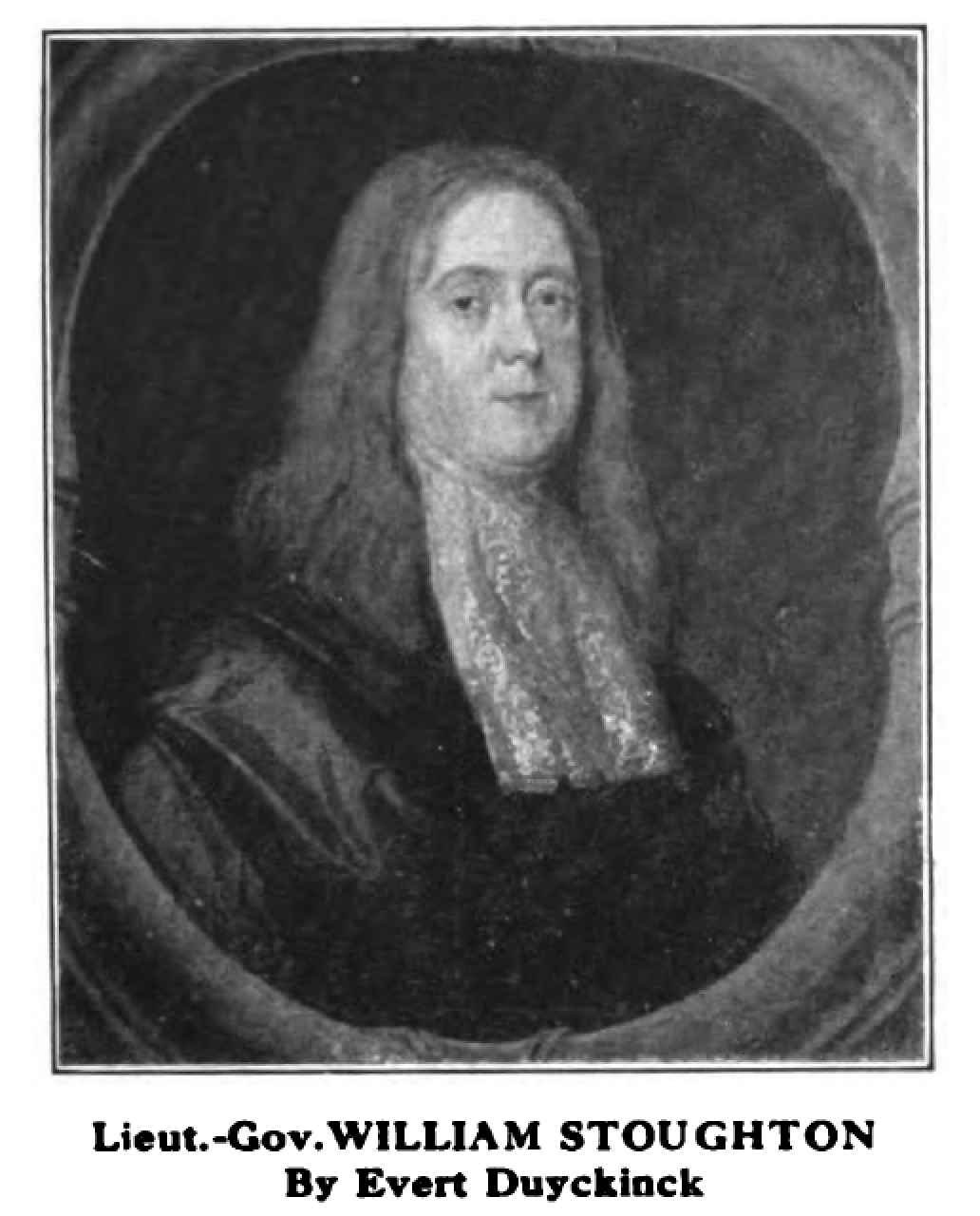
Marshall's legal career in the United States unfolded across a series of prominent positions that steadily elevated her profile in Boston's legal community. After earning her Yale law degree, she spent thirteen years at the firm Csaplar & Bok, progressing from associate to partner. She then joined Choate, Hall & Stewart as a partner, and in 1991–1992 she served as president of the Boston Bar Association, the oldest such organization in the country. From 1992 to 1996 she held the role of general counsel at Harvard University, a position that placed her at the intersection of law and academia. In 1996, Republican governor William F. Weld appointed her as an associate justice of the Massachusetts Supreme Judicial Court, the Western Hemisphere's oldest appellate court. Three years later, in September 1999, Republican governor Paul Cellucci elevated her to chief justice, with her term commencing on October 14. As the twenty-fourth person to hold that office, Marshall became the first woman to lead the court in its more than three-century history, and only the second woman ever to sit on its bench.
Goodridge, Retirement, and Personal Sacrifice
During her tenure as chief justice, Marshall authored more than two hundred opinions, but none carried a broader cultural resonance than Goodridge v. Department of Public Health. In that landmark ruling, she held that the Massachusetts constitution forbade the state from withholding the right to same-sex marriage from its citizens, a decision that would ripple across the nation and reshape the legal landscape for LGBTQ families. The opinion stands as one of the most consequential state-level rulings of the early twenty-first century. Her time on the bench came to a close on July 21, 2010, when she announced her retirement, effective at the end of October. Marshall explained that her decision was driven by a personal need: her husband, New York Times columnist Anthony Lewis, whom she had married in 1984, was battling Parkinson's disease, and she wanted to be present for him in his final years. Lewis passed away in 2013. After leaving the court, Marshall returned to private practice at Choate, Hall & Stewart, the firm where she had previously served as a partner.
Recognition and Continued Influence
Even after leaving the bench, Marshall remained a prominent figure in American legal and academic life. She served as senior fellow of the Yale Corporation, the governing body of Yale University, a role she held until stepping down from the board in 2016; she was the first woman to occupy that senior position and had previously served as a corporation fellow from 2004 to 2010. She also maintained a seat on the Council of the American Law Institute and continued as senior counsel at Choate, Hall & Stewart. In 2017 she was elected a member of the American Philosophical Society, a recognition of her broader contributions to public life. The Bolch Judicial Institute at Duke Law School awarded her the 2021 Bolch Prize for the Rule of Law, honoring her sustained commitment to legal integrity. That same year, on May 27, Harvard University conferred upon her an honorary Doctorate of Laws, and in May 2022 the University of Pennsylvania followed with a similar honorary degree. These honors collectively underscore a career that extended well beyond the courtroom into the institutions that shape American law and governance.
Gallery

Frequently Asked Questions
What is spectral evidence, and why did Stoughton allow it?
Spectral evidence is testimony in which an accuser claims to have seen the spirit or phantom form of the accused person inflicting harm on them. Stoughton permitted such testimony to be used as proof of guilt, a ruling that became the most widely criticized element of the entire trial process.
Why is Stoughton singled out more harshly than his fellow Salem judges?
After the trials collapsed and public sentiment reversed, several of his colleagues acknowledged that the court had made errors. Stoughton, by contrast, never publicly recanted his acceptance of spectral evidence or conceded that the proceedings had been flawed.
More in Jurists And Legal Scholars 1-24
Spotted an error? Know more?
This is a living reference — every entry is fact-audited, and reader corrections feed straight into our audit queue. Suggest an edit · See this site's audit record