Rudolf von Gneist
German jurist and politician who shaped constitutional law.
Heinrich Rudolf Hermann Friedrich von Gneist was a German jurist and politician, born in Berlin as the son of a judge at the city’s Court of Appeal. He studied law at the University of Berlin under the Roman law scholar Savigny, earned his doctorate in 1838, and began teaching as a private lecturer. After working as a court assessor, he traveled through Italy, France, and England for comparative legal study. Returning in 1844, he became an extraordinary professor of Roman law at Berlin, a post he held for life. His early scholarship included a work on formal contracts in Roman law.
Gneist continued his judicial career, serving as an assistant judge on the superior court and the supreme tribunal, but grew frustrated with rigid court procedures. In 1849 he published *Trial by Jury*, arguing for broader use of juries in German courts by comparing German and English legal traditions. The political upheavals of 1848 drew him into politics; after an unsuccessful bid for the National Assembly, he left the judiciary in 1850 and joined the National Liberal Party. He focused on constitutional law and history, publishing works such as *Adel und Ritterschaft* (1853) and a pamphlet on English administrative offices (1857), which he used to critique Prussian governance.
In 1858, Gneist became a full professor of Roman law and was elected to the Prussian House of Representatives for Stettin, serving until 1893. As a leading left-wing speaker, he attacked the government budget in 1862 over army reorganization and defended Polish leaders accused of treason in 1864. An admirer of the English constitution, he published a study of contemporary English constitutional and administrative law between 1857 and 1863, using it to pressure the Prussian government.
From 1868, he served in the North German parliament, working on committees for federal army organization and ecclesiastical disputes. After German unification, he remained in the Reichstag as a National Liberal until 1884. He strongly opposed the Clericals during the Kulturkampf and, in 1879, helped defeat a motion to prosecute socialist members. He advised on major financial and administrative legislation, and his influence shaped Prussian judicial and penal reforms, as well as the new constitution of the Evangelical Church. He briefly served on Prussia’s supreme administrative court in 1875. Gneist also advised the Japanese government on its first constitution through correspondence with Itō Hirobumi, and his teachings significantly influenced his student Max Weber. He died in 1895.
- field
- Jurist and politician
- nationality
- German
- known_for
- Influence on Max Weber; contribution to Japan's first constitution; works on English constitutional history
Lore & Background
Heinrich Rudolf Hermann Friedrich von Gneist was a German jurist and politician, born in Berlin as the son of a judge at the city’s Court of Appeal. He studied jurisprudence at the Friedrich Wilhelm University of Berlin under the renowned Roman law teacher Savigny, earned his doctorate in 1838, and began teaching as a Privatdozent. After serving as a judicial Auscultator and Assessor, he spent several years traveling through Italy, France, and England for comparative legal study. Upon returning in 1844, he became an extraordinary professor of Roman law at the University of Berlin, a position he held for life. He continued his judicial career, becoming an assistant judge of the superior court and the supreme tribunal, but found the rigidity of Prussian court procedure frustrating. This led him to publish *Trial by Jury* in 1849, arguing for broader use of the institution in Germany by contrasting its benefits in England. The 1848 revolutions spurred him into politics; after an unsuccessful candidacy for the National Assembly, he left the judiciary in 1850 and joined the National Liberal Party. He was elected to the Prussian House of Representatives in 1858 for Stettin, serving until 1893, and later to the North German parliament in 1868 and the Reichstag until 1884. A great admirer of the English constitution, he published works contrasting English and German constitutional law to pressure the Prussian government. He was a leading parliamentary voice on financial and administrative questions, and his advice was sought internationally, notably influencing Japan’s first constitution through communication with Itō Hirobumi. He also served briefly on Prussia’s supreme administrative court. His student Max Weber was significantly influenced by his ideas.
Reader's Guide
Gneist's career as a politician was not entirely successful; in a country where parliamentary institutions are the living exponents of the popular will he might have risen to a foremost position in the state, but the party to which he allied himself could never hope to become more than a parliamentary faction. It is as a writer and a teacher that Gneist is best known to posterity. He was a jurist of a special type: to him law was not mere theory, but a living force, and this conception of its power animates all his schemes of practical reform. As a teacher he exercised a magnetic influence, not only for the clearness and cogency of his exposition, but also because of the success with which he developed the talents and guided the aspirations of his pupils. He was a man of noble bearing, religious, and imbued with a stern sense of duty. He was proud of being a Junker, and throughout his writings, despite their liberal tendencies, may be perceived the loyalty and affection with which he clung to monarchical institutions.
Did You Know?
- He was consulted by Japanese Prime Minister Itō Hirobumi during the drafting of Japan's constitution.
- His student Albert Mosse was later dispatched to Japan as a legal advisor to the Meiji government.
Gallery

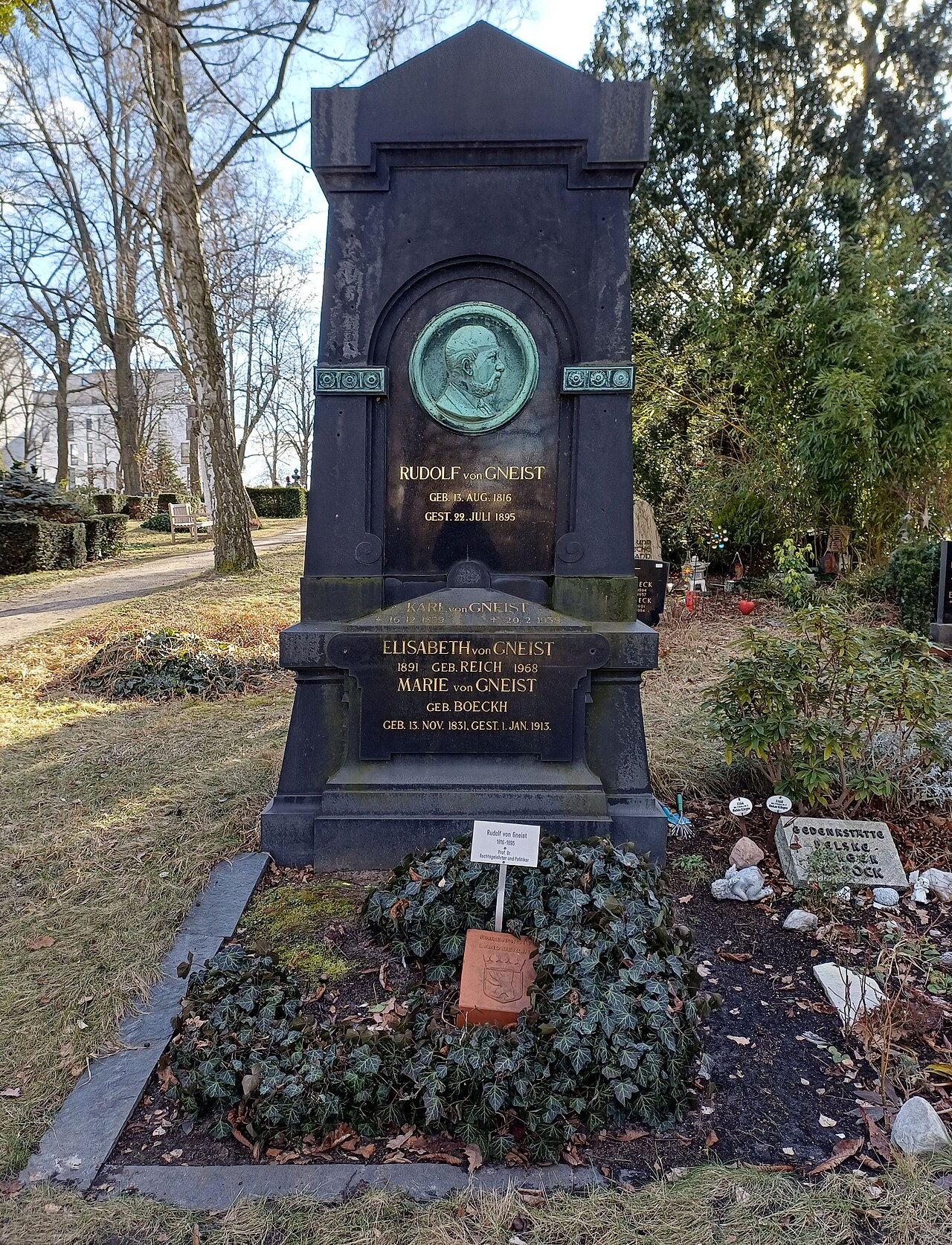
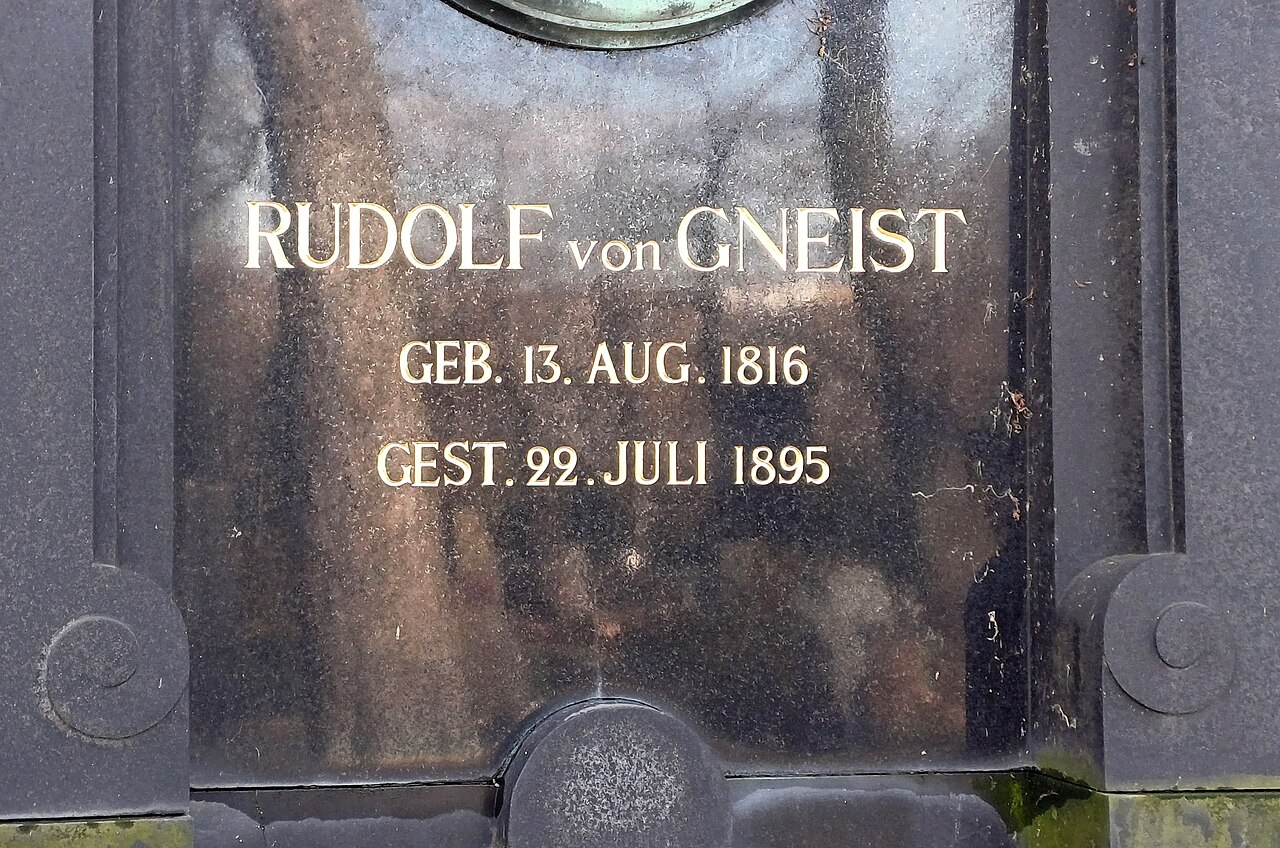
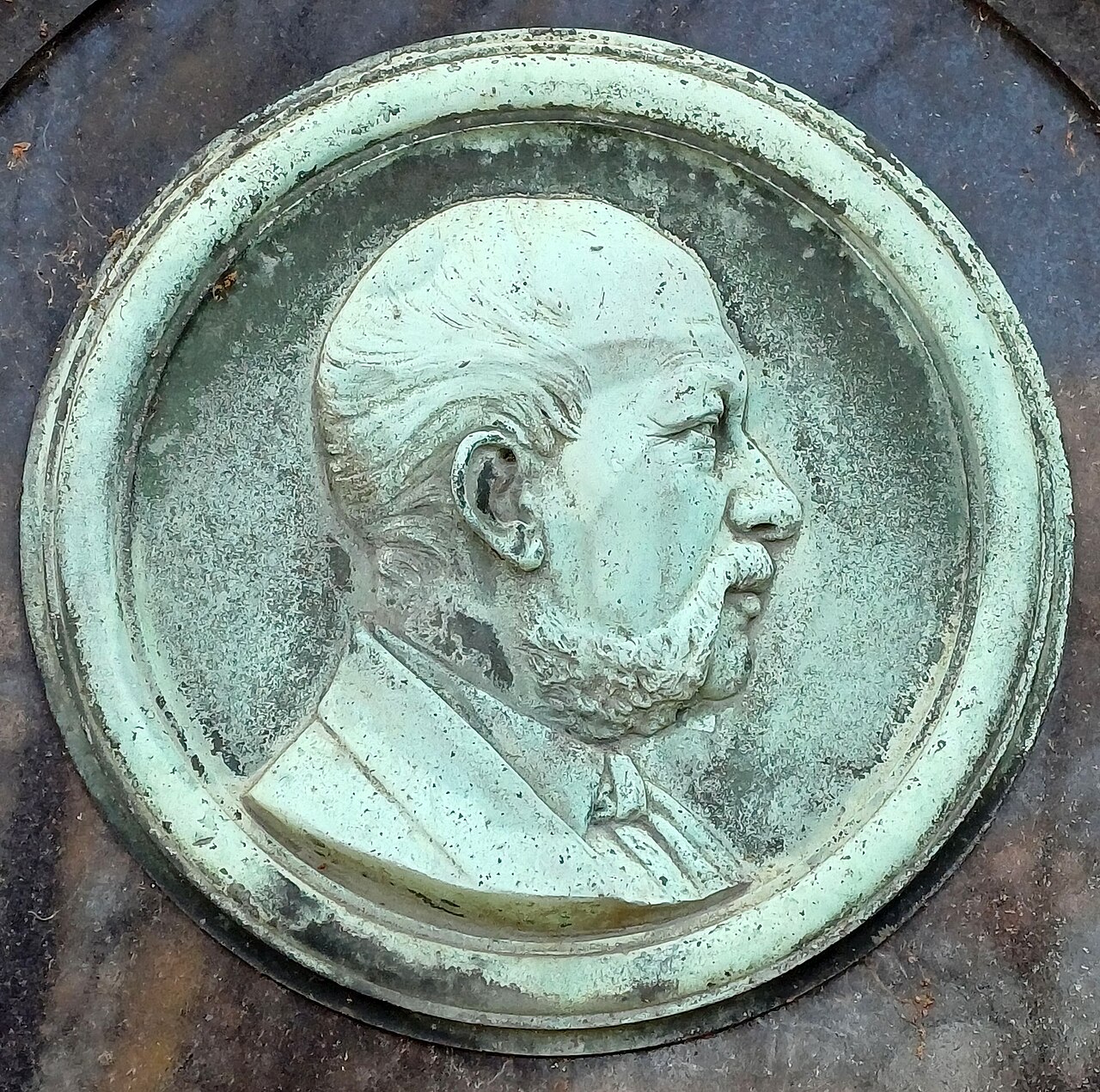
Frequently Asked Questions
What is Rudolf von Gneist most famous for?
His legacy rests on two pillars: shaping the intellectual development of the sociologist Max Weber and helping inform the drafting of Japan's first constitution through his exchanges with Itō Hirobumi.
How did Rudolf von Gneist influence Max Weber?
Gneist was a major intellectual force on Weber during his student years, leaving a lasting imprint on the younger scholar's thinking about law, governance, and society.
What role did Rudolf von Gneist play in Japanese constitutional history?
Through written correspondence with Itō Hirobumi, Gneist contributed legal and constitutional ideas that helped shape the framework of Japan's first constitution.
What was Rudolf von Gneist's family background?
He grew up in a legal household in Berlin; his father held a judgeship at the Kammergericht, the city's Court of Appeal, which likely fostered his early engagement with law.
More in Jurists And Legal Scholars 1-24
Spotted an error? Know more?
This is a living reference — every entry is fact-audited, and reader corrections feed straight into our audit queue. Suggest an edit · See this site's audit record